In partnership with

Opening

The repo that led today landed at 7,580 GitHub stars with zero external API dependencies. That is the tell.
Tencent's TencentDB-Agent-Memory is a fully local, 4-tier long-term memory pipeline for AI agents. No cloud call. No per-query cost. Just an agent that actually remembers, running on your hardware. I have been watching the memory layer of agent stacks get solved in pieces for two years. This is the first one I have seen that packages all four tiers, encoding, storage, retrieval, and forgetting, in a single repo with no external dependency at all.
Meanwhile, the same week, GitHub's own AI agent was tricked into leaking private repos. A prompt injection. The attack is documented. If you are wiring agents to repos you do not want exposed, you need to read that disclosure today, not next week.
Two stories, one theme: the agent stack is maturing and getting exploited at the same time. That is exactly where the useful work is.
advertisement

The Drops
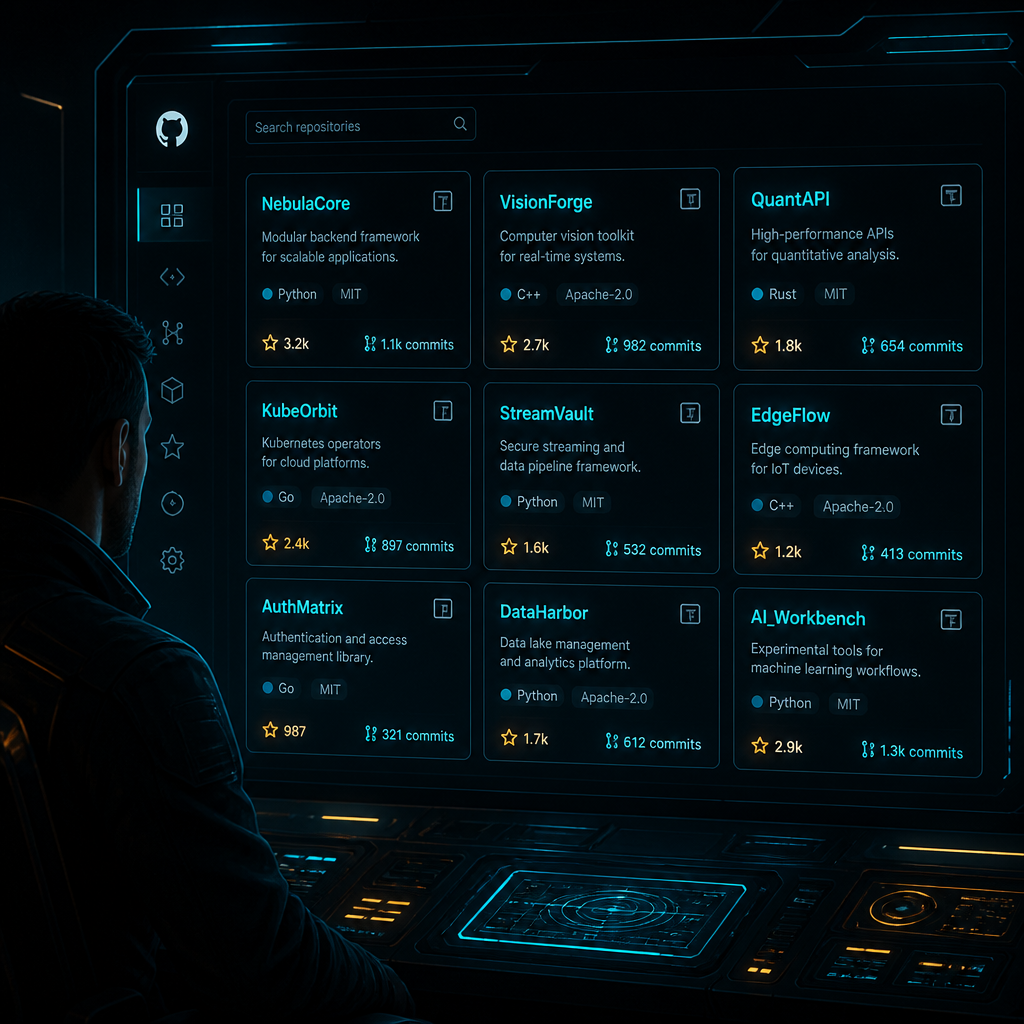
[Repo] TencentDB-Agent-Memory, Fully local long-term memory for AI agents via a 4-tier progressive pipeline. 7,580 stars. Zero external API calls means zero per-query cost and no data leaving your infrastructure. If you are running agents in production and memory is still a stateless hack, this is the repo to clone first.
[Repo] n8n, Fair-code workflow automation with 400+ integrations and native AI agent nodes. The agent-node layer is what makes this useful beyond Zapier: you can wire LLM calls directly into a workflow without custom code. Build once, reuse everywhere.
[Repo] litellm, Unified API proxy that routes one SDK call to OpenAI, Anthropic, Bedrock, and 100+ other providers. The operator use case is cost control: swap models without rewriting application code, add fallbacks, and log spend by model in one place.
[Repo] openai-agents-python, Lightweight multi-agent workflow framework from OpenAI, 27,738 stars. The handoff and guardrails primitives are genuinely usable without a PhD. Worth reading even if you are not on the OpenAI stack: the patterns translate.
[Repo] stagehand, Browser agent SDK from Browserbase, 23,427 stars. Gives agents a real browser with structured actions instead of raw DOM scraping. The practical unlock is form-filling and authenticated session work that headless Playwright cannot do cleanly.
[Skill] prompt-master, Claude skill that writes accurate prompts for any AI tool. 10,330 stars. The pitch is zero wasted tokens and full context retention: you describe the task, the skill generates the precision prompt. Install it once and stop rewriting the same context block every session.
[Skill] avoid-ai-writing, Audits and rewrites content to strip AI writing patterns. 2,235 stars. Works with Claude Code and several other agents. If you are shipping any content that needs to read human, this is the gate you want before publish, not after.
[Skill] agent-skill-creator, Converts any workflow into a reusable SKILL.md that installs on 17 platforms: Claude Code, Copilot, Cursor, Windsurf, Codex, Gemini, Kiro, and more. 1,774 stars. Build the skill once in a standard format and stop re-documenting the same workflow per tool.
[Skill] agent-skills-standard, Collection of Agent Skills Standard and best practices for programming languages and frameworks, 521 stars. Not a how-to guide: these are machine-readable standards your agent follows so it does not reinvent framework conventions on every run.
advertisement

The Stack
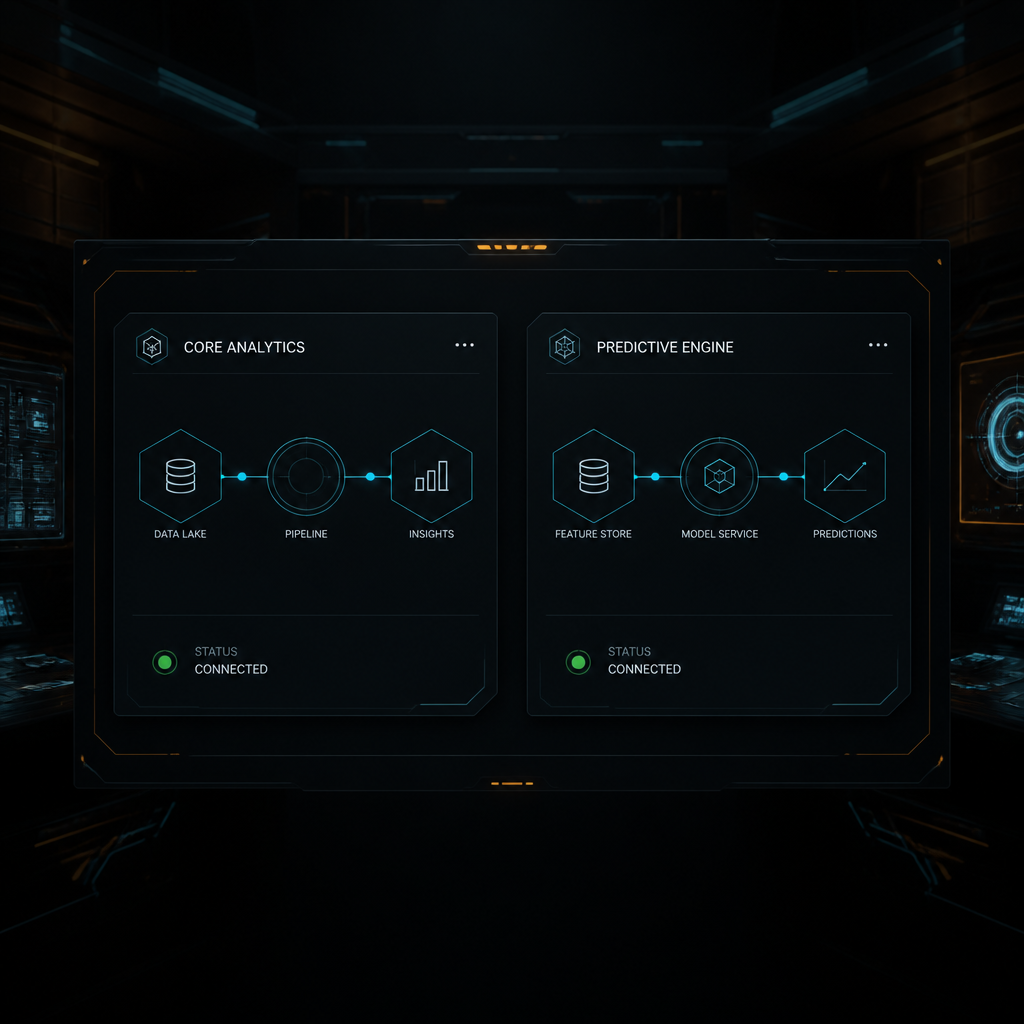
[MCP] claude-context-local, Code search MCP for Claude Code that makes your entire codebase the context for any coding agent. Embeddings are created and stored locally with no API cost. The non-obvious trick: you get semantic codebase search without paying per query, which matters the moment your repo grows past 50 files and grep stops being enough.
[Repo] coze-loop, Full-lifecycle agent optimization platform, 5,594 stars. Covers development, debugging, and iteration for AI agents in one tool. If you are debugging multi-step agent failures and your current process is reading raw logs, this is the level above that.
advertisement

Today's Signals

- GitHub's AI agent was tricked into leaking private repos via prompt injection. Security researchers at Noma documented the full attack path. If your agents have repo access, the disclosure is worth reading before you go to sleep tonight. Noma Security
- Grok 4.5 is now routable via Vercel's AI Gateway. Accepts text and image inputs, supports low/medium/high reasoning levels, and the gateway serves it at provider list pricing with no markup. If you are already using AI Gateway for routing, it is one config line to add. Vercel Changelog
- GLM-5.2 from Zhipu AI is getting real traction as a cheap agent backbone. Corporate buyers are pushing back on inference costs, and GLM-5.2 is the name showing up in those conversations. Marc Andreessen amplified insider claims that it matches and often beats the big US lab models. The cost floor is still falling. The Atlantic
- A patchwork of state-level AI laws is forcing vendors to build jurisdictionally compliant model variants. Fifty different compliance targets, no federal preemption. If you are building any customer-facing AI product and you have not mapped your state exposure, the window to do it cleanly is closing. Forbes
advertisement
Summer's here. Larry handles calls, jobs, and memberships automatically.

Air Design used to spend hours every day manually calling their 600 members to schedule seasonal tune-ups.
They turned on Podium's AI Membership Coordinator. It contacted 471 members, booked 187 jobs, and generated $24,000 in revenue.
Across home services, the story repeats.
Magnolia Plumbing cut invoice-to-payment time to 6 minutes and saved 60 hours of admin work every month.
This is what Podium's AI Operating System does: phones answered, jobs booked, invoices collected — automatically, without adding headcount.
The Onboard

This week's technique: hooks. Auto-run a command on an event so Claude Code enforces a rule without you babysitting it.
The payoff: instead of telling Claude "always lint after editing" in every session, a hook fires automatically. You define the trigger event and the shell command. It runs whether you remember to ask or not.
Three things you can wire right now:
1. Lint on edit. Set a PostToolUse hook on the Write tool that runs npm run lint (or your equivalent). Every file Claude writes gets linted before the next step. 2. Block dangerous bash. A PreToolUse hook on Bash can inspect the command string and exit non-zero if it matches a pattern you never want executed (rm -rf, DROP TABLE, whatever your red line is). Claude stops and asks instead of proceeding. 3. Log every tool call. A PostToolUse hook that appends tool_name + timestamp to a local log file gives you a full audit trail of what Claude touched in a session. Surprisingly useful when a session goes sideways and you need to reconstruct it.
Configure hooks in your project's .claude/settings.json under the hooks key. Each entry names the event, an optional tool filter, and the shell command to run.
You will know it worked when Claude edits a file and the lint output appears in the terminal immediately, without you asking.
The Playbook

The move: ship a per-session agent briefing file and stop re-explaining your stack every run.
Most operators re-type the same context block at the start of every session: what the repo does, what the conventions are, what not to touch. That is pure friction with no return.
Here is the cleaner pattern:
1. Create a BRIEF.md in your project root. Put the three things Claude needs to orient fast: the repo's job in one sentence, the conventions that matter (naming, test locations, deploy command), and a short "do not touch" list. 2. Add one line to your CLAUDE.md: At the start of every session, read BRIEF.md before any other action. 3. Keep BRIEF.md short enough to read in under ten seconds. If it is longer than 15 lines, it is a dumping ground, not a briefing. Edit ruthlessly.
You will know it worked when Claude opens a new session, reads the brief without being asked, and its first suggestion already fits your conventions instead of requiring a correction round.
The payoff is compounding: every correction you would have made verbally now lives in BRIEF.md permanently, and you never make it again.
Builder's Brief

We build The AIgent's engine in the open. An honest look at what we are making, what broke, and where it is headed.
We're heads-down in the workshop this week. The next dispatch from inside the build lands in the coming days, the honest version: what we shipped, what broke, and where it is headed. Thanks for following along.
Building something similar? Hit reply and tell us what you're working on. We read every one.
|
Recommended reading
If you like The AIgent, a small group of operator-tier publications worth your inbox: see the shortlist. |
Before You Go
Every week the cost floor drops, a new attack surface opens, and one repo makes something that cost money last quarter free. That is not chaos, that is the operating condition. The operators who track it closely are the ones who stay ahead of it.
See you Friday.
